
A Frustrating Problem That's More Common Than You Think
You press the button on your garage door remote, the door begins its descent, and then — just before it touches the floor — it reverses and goes right back up. If this scenario sounds familiar, you're not alone. This is one of the most common garage door complaints we hear from homeowners in Norman, and it can range from a simple fix to a sign of a more serious issue.
A garage door that won't stay closed isn't just annoying. It's a security risk, an energy efficiency problem, and an open invitation for pests, rain, and dust to enter your garage. Let's walk through the most likely reasons your garage door keeps reversing and what you can do about each one.
Understanding Your Garage Door's Safety Reversal System
Before we dive into specific causes, it helps to understand why your garage door is designed to reverse in the first place. Federal law has required all garage door openers manufactured after 1993 to include an auto-reverse mechanism. This system uses two main components to prevent the door from closing on a person, pet, or object:
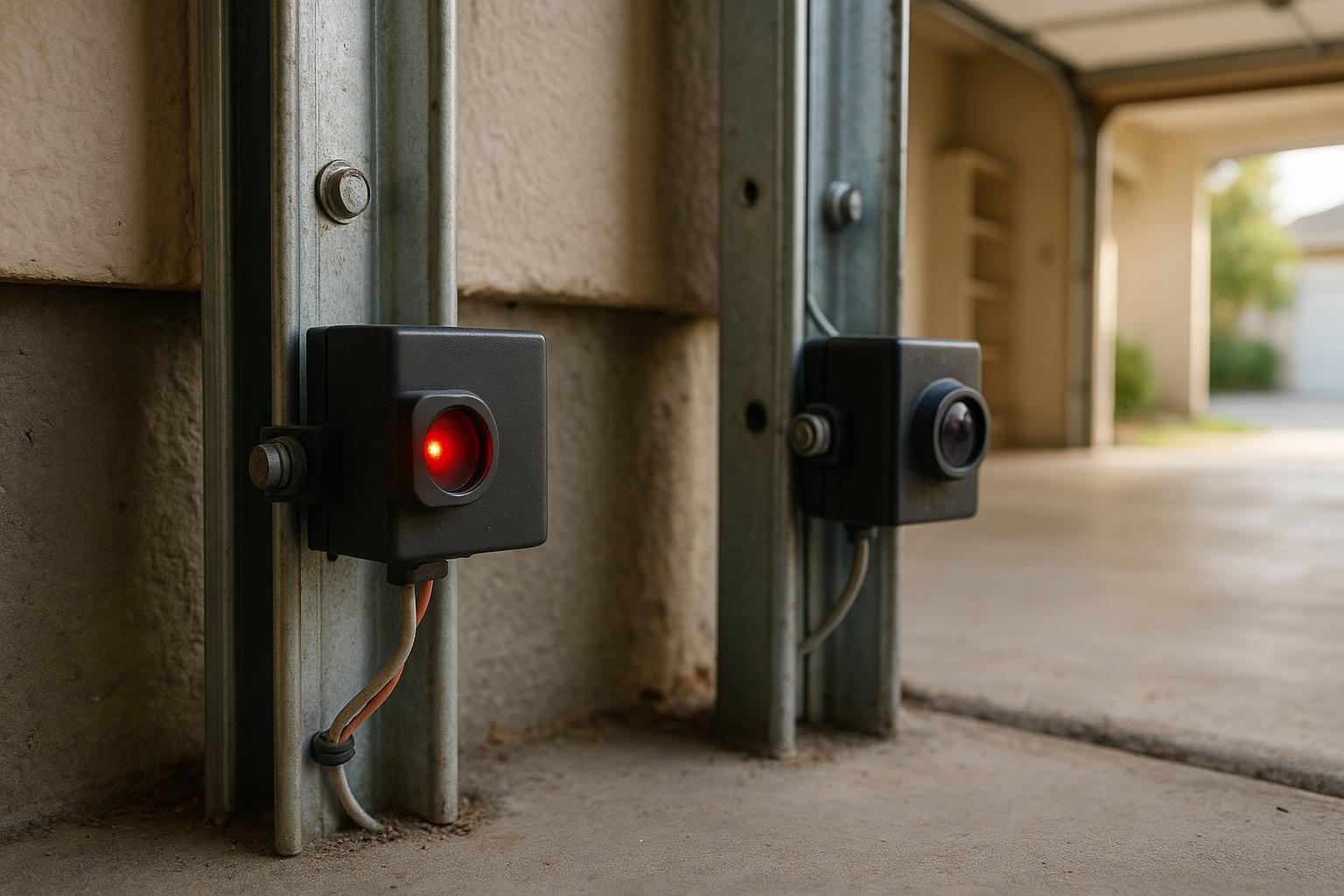
- Photo-eye sensors: Two small sensors mounted near the bottom of your garage door tracks that project an invisible beam across the opening.
- Mechanical auto-reverse: A pressure-sensitive system that reverses the door if it encounters physical resistance while closing.
Both of these systems are critical safety features. When your door reverses unexpectedly, it usually means one of these systems has been triggered — sometimes for a legitimate reason, and sometimes due to a malfunction.
The Most Common Causes of a Reversing Garage Door
1. Misaligned or Dirty Photo-Eye Sensors
This is the number one culprit in the vast majority of cases. The photo-eye sensors on either side of your garage door opening need to be perfectly aligned with each other to maintain their infrared beam. If one sensor gets bumped, shifted, or covered in dirt, the system interprets the broken beam as an obstruction and reverses the door.
Here's what you can do:
- Check both sensors for visible dirt, cobwebs, or debris and gently clean them with a soft cloth.
- Make sure both sensor lights are lit and steady. A blinking light usually indicates misalignment.
- Carefully adjust the sensors so they point directly at each other. Even a fraction of an inch can make a difference.
In Norman, where we get plenty of wind-blown dust and red dirt, sensor cleaning is something we recommend homeowners do at least a few times a year.
2. Something Is Blocking the Door's Path
It sounds obvious, but it's worth checking. A small object on the garage floor, a broom handle that's fallen over, or even a leaf pile blown in by an Oklahoma breeze can trigger the safety sensors. Walk the full length of the door's path and make sure nothing is in the way — even something as small as a pebble near the sensors can cause problems.
3. Incorrect Close-Limit Settings
Your garage door opener has close-limit settings that tell the motor exactly how far the door should travel before it's considered fully closed. If these settings are off, the opener may think the door has hit something when it contacts the floor, triggering the auto-reverse.
Adjusting close-limit settings typically involves turning a small screw or dial on the opener unit. However, if you're not comfortable working with the opener's controls, this is a quick fix for a professional technician. Over-adjusting the limit can cause the door to press too hard against the floor, which creates its own set of problems.
4. Worn or Damaged Tracks
If your garage door tracks are bent, dented, or have accumulated grime, the door may encounter resistance as it travels downward. The opener senses this resistance and reverses the door as a safety precaution. Inspect the tracks on both sides for visible damage and wipe them down to remove built-up grease and debris.
Bent tracks should always be repaired by a professional. Attempting to straighten them yourself can worsen the damage or create a dangerous situation where the door comes off the track entirely.
5. Broken or Worn Rollers
Garage door rollers allow the door to glide smoothly along the tracks. When rollers crack, chip, or lose their bearings, they create friction and uneven movement. This added resistance can fool the opener into thinking the door is hitting an obstruction. If you hear grinding, squeaking, or scraping sounds when the door moves, worn rollers are a likely suspect.
6. Problems with the Garage Door Springs
Your garage door springs do the heavy lifting — literally. They counterbalance the weight of the door so the opener doesn't have to work as hard. When a spring weakens or breaks, the door becomes much heavier for the opener to manage. The opener may struggle to control the door's descent and trigger a reversal.
Spring issues are something we strongly recommend leaving to professionals. Garage door springs are under extreme tension and can cause serious injury if handled improperly. If you suspect a spring problem, give us a call and we'll come take a look.
7. Opener Motor or Logic Board Issues
If you've checked everything else and the door still reverses, the problem may be internal to the opener itself. A failing motor, worn gears, or a malfunctioning logic board can send incorrect signals that cause erratic behavior. Openers that are 10 to 15 years old are especially prone to these types of issues.
When to Call a Professional
Some of the fixes above — cleaning sensors, removing obstructions, and basic visual inspections — are perfectly safe for homeowners to handle. But if the problem persists after basic troubleshooting, or if you suspect issues with springs, tracks, or the opener's internal components, it's time to call in a professional.
At Norman Garage Door Works, we diagnose and repair reversing garage doors regularly. Our technicians serving Norman, Moore, Noble, and surrounding areas can quickly identify the root cause and get your door working properly — usually in a single visit.
Preventing Future Reversing Issues
The best way to avoid unexpected garage door problems is with regular maintenance. Here are a few habits that can keep your door operating smoothly year-round:
- Clean your photo-eye sensors every few months, especially after storms or dusty conditions.
- Lubricate the rollers, hinges, and tracks with a garage door-specific lubricant twice a year.
- Test the auto-reverse function monthly by placing a roll of paper towels in the door's path. If the door doesn't reverse on contact, call for service immediately.
- Schedule annual professional maintenance to catch worn parts before they become bigger problems.
A garage door that reverses before closing is trying to tell you something. Whether it's a simple sensor cleaning or a sign of a deeper mechanical issue, addressing the problem promptly keeps your home secure and your garage door system in good shape for years to come.
If your garage door won't stay closed and you've exhausted the basic troubleshooting steps, Norman Garage Door Works is here to help. Contact us today to schedule a diagnostic visit and get your door back on track — literally.