
Your Garage Door Springs Are Doing More Work Than You Think
Every time you open and close your garage door, the springs are doing the heavy lifting — literally. A standard two-car garage door can weigh between 150 and 250 pounds, and it's the springs that bear nearly all of that weight. Your garage door opener simply guides the motion; the springs provide the actual force needed to raise and lower the door safely.
For homeowners in Norman, where we rely on our garages daily — whether it's parking the car, storing tools, or keeping out Oklahoma's unpredictable weather — a broken spring isn't just an inconvenience. It can leave your door stuck, damage your opener, or even pose a safety risk to your family. The good news is that spring failure doesn't have to catch you off guard. Understanding how long springs last and recognizing the warning signs can help you stay ahead of the problem.
How Long Do Garage Door Springs Typically Last?
Garage door springs are rated by cycle life. One cycle equals one full open and one full close of the door. Most standard torsion springs are rated for approximately 10,000 cycles, which translates to roughly 7 to 10 years of average use for a typical household.
However, several factors can shorten or extend that lifespan:
- Frequency of use: If you use your garage door four or more times a day — common in busy Norman households — your springs will wear out faster than someone who only opens the door twice daily.
- Climate and temperature swings: Oklahoma's wide temperature fluctuations, from freezing winter mornings to scorching summer afternoons, cause the metal in springs to expand and contract repeatedly. Over time, this accelerates fatigue and weakening.
- Spring quality: Not all springs are created equal. Higher-cycle springs (rated for 20,000 or even 25,000 cycles) are available and can last significantly longer, though they cost a bit more upfront.
- Maintenance history: Springs that are regularly lubricated and inspected tend to last longer than those that are neglected.
Torsion Springs vs. Extension Springs: What's on Your Door?
Before we talk about replacement, it helps to know which type of spring system your garage door uses.
Torsion Springs
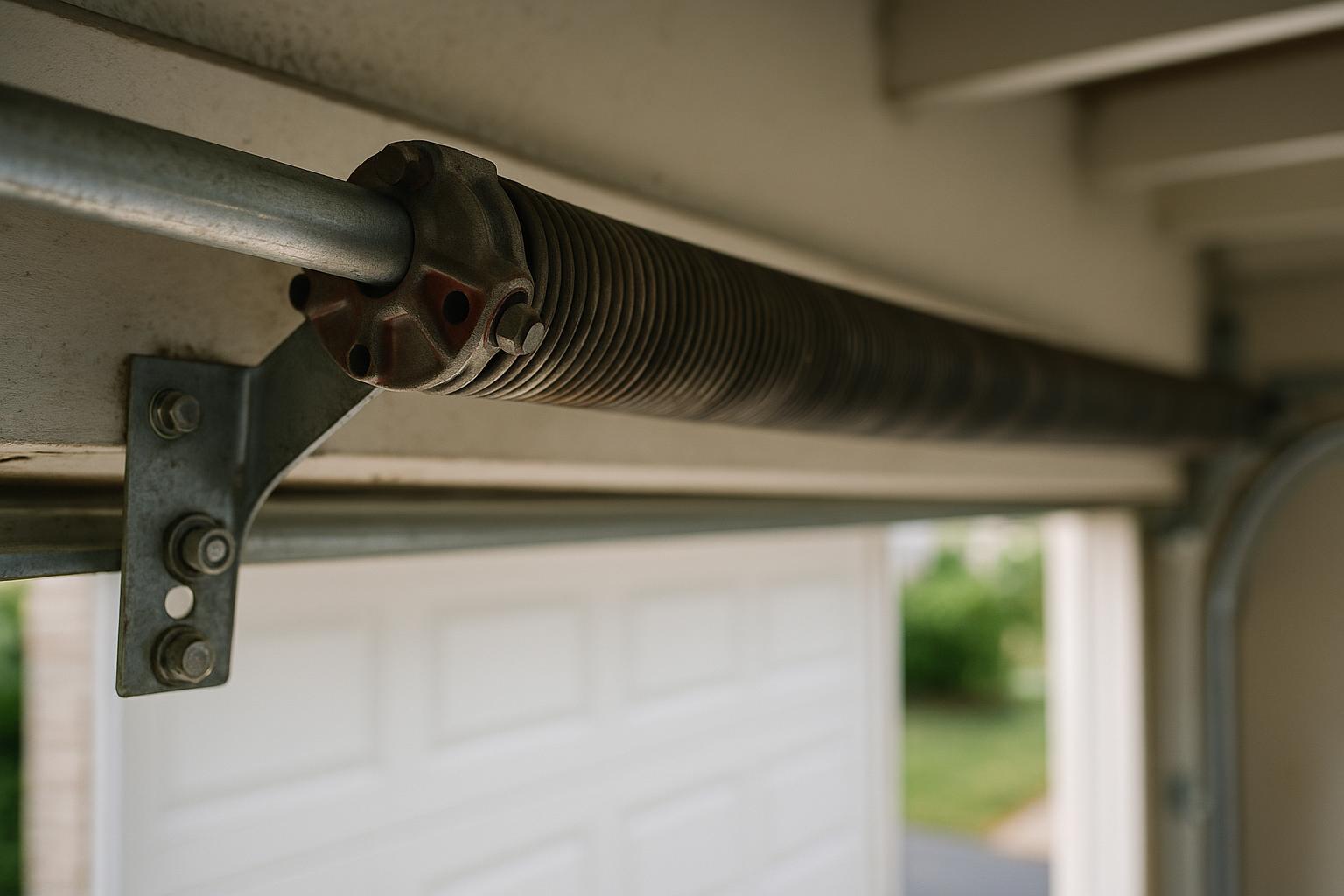
These are mounted horizontally on a metal shaft above the garage door opening. They use torque to lift the door and are the more common type found on modern garage doors. Torsion springs are generally considered safer and more durable than extension springs.
Extension Springs
These run along the horizontal tracks on either side of the door. They stretch and contract to provide lifting force. Extension springs are more commonly found on older or lighter doors. They can be more dangerous when they break because they're under significant tension and can snap violently if safety cables aren't installed.
If you're unsure which type your Norman home has, a quick visual inspection or a call to a local garage door professional can help you identify your system.
Warning Signs Your Garage Door Springs Are Wearing Out
Springs rarely fail without giving some warning. Here are the most common signs that your springs are nearing the end of their life:
- The door feels heavier than usual: If you disconnect the opener and try to lift the door manually, a door with healthy springs should feel relatively light and stay in place when partially open. If it feels extremely heavy or slams down, the springs are losing tension.
- The door opens unevenly: If one side rises faster than the other, one spring may be weaker or close to breaking.
- Visible gaps in the spring coils: A torsion spring that's about to break often shows a visible gap or separation in the coils. This is one of the clearest indicators of imminent failure.
- Loud squeaking or grinding noises: While some noise is normal, excessive squeaking or grinding during operation can signal that the springs are dry, corroded, or fatigued.
- The opener is struggling: If your garage door opener seems to be working harder than usual — straining, stopping mid-cycle, or running louder — weakened springs could be forcing it to compensate for the lost lifting power.
- The door won't stay open: A properly balanced door should stay in place when opened halfway. If it slides down, the springs aren't providing enough counterbalance.
Can You Replace Garage Door Springs Yourself?
We understand the DIY spirit — it's strong here in Norman. But garage door spring replacement is one job we strongly recommend leaving to professionals. Here's why:
- Extreme tension: Torsion springs are wound under tremendous force. A spring that releases unexpectedly can cause serious injury or even death.
- Specialized tools required: Proper replacement requires winding bars, clamps, and precise calibration that most homeowners don't have in their toolbox.
- Incorrect installation risks: An improperly installed spring can damage your door, your opener, or create an ongoing safety hazard.
Professional technicians have the training, tools, and experience to complete the job safely and correctly, usually in under an hour.
Should You Replace One Spring or Both?
This is one of the most common questions we hear from homeowners. If only one spring has broken, is it worth replacing both?
Our recommendation: replace both springs at the same time. Here's the reasoning:
- If one spring has reached the end of its cycle life, the other one is likely not far behind.
- Replacing both ensures even tension and balanced operation, which protects your door and opener.
- The labor cost is the biggest part of the job. Since the technician is already there with the tools set up, adding the second spring is a relatively small additional expense compared to scheduling a separate service call later.
How Preventive Maintenance Extends Spring Life
You can get more years out of your garage door springs with some simple maintenance practices:
- Lubricate the springs every few months: Use a silicone-based or white lithium garage door lubricant. Spray along the full length of the spring coils. This reduces friction, prevents rust, and helps the metal flex smoothly.
- Schedule an annual inspection: A professional tune-up once a year can catch early signs of wear, check the door's balance, and ensure all hardware is tight and functioning.
- Keep the tracks and rollers clean: Debris and grime on the tracks force the springs to work harder than necessary.
- Test the door's balance periodically: Disconnect the opener, manually lift the door halfway, and let go. If it stays in place, your springs are in good shape. If it moves up or down, it's time for an adjustment or inspection.
Don't Wait for the Loud Bang
Many Norman homeowners first learn about garage door springs when they hear a loud bang from the garage — the unmistakable sound of a spring snapping. At that point, the door is inoperable, and you're calling for emergency service. By paying attention to the warning signs and scheduling proactive replacement, you can avoid the stress, the safety risk, and the higher cost of an emergency repair.
At Norman Garage Door Works, we help homeowners throughout Norman, Moore, Noble, and the surrounding communities keep their garage doors running safely and smoothly. Whether you need a spring inspection, a replacement, or a full maintenance tune-up, our team is here to help with honest advice and reliable service.
If your garage door springs are showing signs of wear — or if you simply can't remember the last time they were inspected — give us a call. A quick check today can save you a major headache tomorrow.