
Getting your garage door ready for winter
In short: tighten your hardware, replace worn weatherstripping, lubricate the moving parts, test the balance, and check your opener's sensors and backup battery before the first real cold snap hits. None of this takes a whole weekend, and most of it takes less than an hour. The payoff is a door that still opens smoothly on the mornings it matters most.
Oklahoma winters aren't defined by months of snow. They're defined by swings — a 70-degree afternoon followed by a hard freeze overnight, wind that rattles anything loose, and the occasional ice event that catches everyone off guard. That pattern is harder on a garage door than steady cold ever would be, because metal expands and contracts, lubricant thickens and thins, and seals that were fine in September start letting in drafts once the temperature starts yo-yoing.
Check the weatherstripping first
The rubber seal along the bottom of your door and the strips along the sides are your first line of defense against wind-driven cold and dust. Over a long hot summer, that rubber dries out, cracks, and loses its flexibility. Run your hand along the bottom seal — if it's stiff, flattened, or has gaps where it meets the floor, cold air and blowing dust will find their way in all winter. Replacement kits are inexpensive and most homeowners can swap them out with basic tools in under thirty minutes.
Lubricate before the cold sets in, not after
Garage door hardware needs lubrication year-round, but it matters more heading into winter because cold makes grease and oil thicken, which adds resistance right when your opener and springs are already working harder. Use a silicone-based or lithium-based garage door lubricant (not WD-40, which is a cleaner, not a lubricant) on the rollers, hinges, springs, and the track itself. A light coating is enough — you're not trying to coat the metal, just keep it moving freely.
Test the balance
With the opener disconnected (pull the release cord), lift the door manually about halfway and let go. A properly balanced door will stay put. If it drifts down or slams, the springs are compensating for wear and the opener is picking up the slack. That's not a winter-specific problem, but cold weather tends to expose it faster, since a struggling spring system combined with stiff, cold lubricant can push a marginal door into a stuck one. If your door fails this test, that's a sign it may be time for spring replacement rather than another round of lubrication.
Inspect the opener and backup power
Sudden storms and wind gusts are part of the season here too, and with them comes the occasional power blip. If your opener has a battery backup, test it now — not during an outage. Check that the safety sensors near the floor are aligned and free of dust buildup, since a dirty or knocked-out-of-alignment sensor will refuse to close the door at all, which is a frustrating discovery on a cold, windy evening. If your opener doesn't have battery backup and you rely on your garage as a main entry point, this is worth adding before winter weather settles in.
Tighten hardware loosened by heat and wind
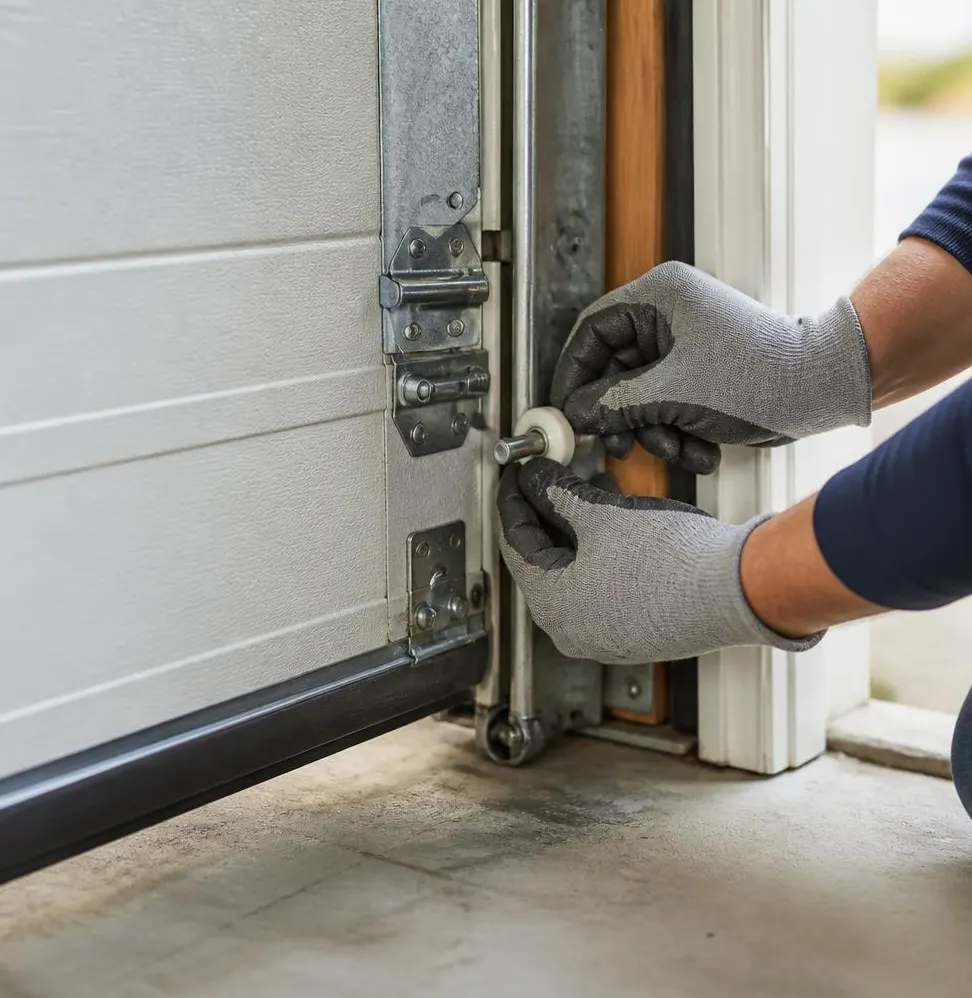
Hinges, brackets, and roller brackets work their way loose over a season of heat expansion and the kind of sudden wind gusts that come through with spring and fall storm systems. A socket wrench and ten minutes is usually all it takes to snug everything back up. Loose hardware doesn't just cause noise — it puts uneven stress on the track and can throw off the door's alignment over time.
Think about insulation if your garage isn't finished
If your garage shares a wall with living space, or if you use it as a workshop or storage for anything temperature-sensitive, an uninsulated door will let the cold radiate right through on the nights temperatures drop fast. Insulated garage doors or retrofit insulation kits won't make your garage warm, but they'll cut down on the temperature swing and reduce how hard your opener and hardware have to work against outdoor conditions.
Clear the track and clean the sensors
Dust is a year-round issue in this part of the state, and it settles into the track and onto the opener sensors more than most homeowners expect. A quick wipe-down of the track with a damp cloth and a check of the sensor lenses keeps everything running the way it's supposed to once temperatures start dropping and you're relying on the door more consistently to seal in warmth.
When to call Norman Garage Door Works
If your door fails the balance test, if the weatherstripping is too far gone to fix with a basic kit, or if the opener isn't responding reliably to its sensors, those are jobs worth having looked at before the weather turns. Norman Garage Door Works handles garage door maintenance visits that cover the full inspection — springs, rollers, hardware, opener function, and seals — so you're not guessing whether something will hold up through the first cold snap. If a spring is already showing signs of wear, we also handle spring replacement safely, which isn't something to tackle without the right tools given how much tension these systems carry.
If you're in Norman, Moore, Oklahoma City, Noble, Purcell, Blanchard, Newcastle, or Midwest City and want your garage door checked out before winter weather arrives, give Norman Garage Door Works a call. We're the local garage door company Norman homeowners trust to get it done right the first time.